
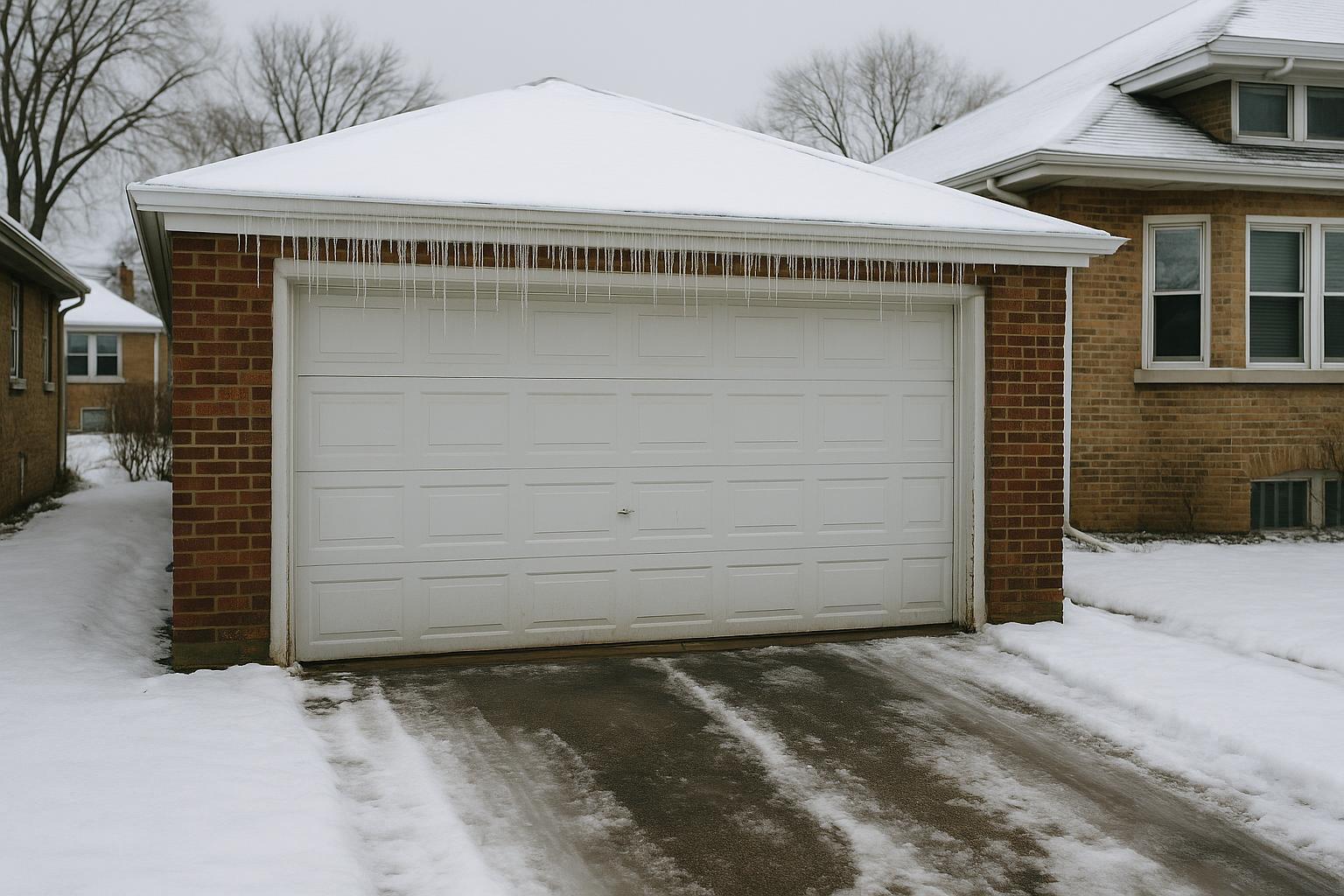
Chicago Winters Are Tough on Garage Doors
If you've lived in Chicago long enough, you know that winter doesn't go easy on anything — your car, your pipes, your heating bill, and yes, your garage door. When temperatures drop below freezing and stay there for weeks, your garage door system takes a beating. Metal contracts, lubricant thickens, weatherstripping stiffens, and parts that worked perfectly in October can start grinding, sticking, or failing altogether by January.
Understanding how cold weather impacts your garage door can help you prevent costly breakdowns and keep your home secure all winter long. Let's walk through the most common cold-weather garage door problems and what you can do about them.
Frozen Garage Door Seals
One of the most common winter complaints we hear from homeowners across Chicago's South Side, Evergreen Park, and Oak Lawn is a garage door that seems stuck to the ground. This usually happens when the rubber weatherstripping along the bottom of the door freezes to the concrete floor or driveway.
When moisture collects under the seal and temperatures drop overnight, ice forms a bond between the seal and the ground. If you hit the opener button and the door doesn't budge — or worse, the opener strains against the frozen seal — you could damage the opener, the seal, or even the door itself.
What You Can Do
- Never force it. If the door won't open, don't keep pressing the button. The opener motor can burn out trying to break through ice.
- Use a heat source carefully. A hair dryer or heat gun on a low setting can melt the ice along the bottom seal. Avoid using boiling water, which can refreeze quickly and make the problem worse.
- Apply a silicone-based lubricant to the bottom seal before a freeze. This helps prevent moisture from bonding the rubber to the concrete.
- Keep the area clear. Shovel snow and clear standing water away from the base of the door before nightfall.
Contracting Metal Parts
Your garage door system is full of metal components — springs, tracks, hinges, rollers, and cables. When the temperature plummets, metal contracts. This contraction can cause several issues:
- Misaligned tracks: Even slight shifts in the metal tracks can cause the door to bind, scrape, or go off track entirely.
- Increased spring tension: Torsion and extension springs are already under tremendous tension. Cold weather makes the metal more brittle and changes the spring's balance, which can lead to snapping — a dangerous situation.
- Stiff hardware: Hinges and rollers may not pivot as freely, making the door feel heavy or sluggish.
Spring breakage is especially common during Chicago's coldest stretches. If you hear a loud bang from your garage in the middle of winter, there's a good chance a spring just snapped. This is not a DIY repair — garage door springs are under extreme tension and should only be handled by a trained technician.
Thickened Lubricant
The grease and lubricant on your garage door's moving parts can thicken or even harden in freezing temperatures. When this happens, rollers don't glide smoothly, hinges resist movement, and the opener has to work much harder to lift the door.
The Fix
Use a lithium-based or silicone-based garage door lubricant, which is designed to perform in low temperatures. Avoid standard WD-40, which is a solvent and not a true lubricant. Apply it to the springs, rollers, hinges, and tracks before the first major cold snap, and reapply midwinter if needed.
Opener Sensitivity Issues
Modern garage door openers have safety features that detect resistance. When cold weather makes the door heavier or stiffer, the opener may interpret that extra resistance as an obstruction and refuse to close the door — or reverse it partway down.
If your opener seems overly sensitive in winter, the force settings may need a slight adjustment. Most openers have force adjustment screws or digital settings that control how much resistance the motor will push through. However, be cautious — setting the force too high can override important safety features. If you're unsure, it's best to have a professional take a look.
Weatherstripping Wear and Gaps
The weatherstripping around your garage door — along the bottom, sides, and top — is your first line of defense against cold air, snow, and moisture. Over time, especially in a climate like Chicago's, this material cracks, shrinks, and loses its flexibility.
Worn weatherstripping means cold drafts pouring into your garage, which can affect anything stored inside and even raise your heating costs if your garage is attached to your home. Replacing weatherstripping is a relatively inexpensive maintenance task that makes a noticeable difference in comfort and energy efficiency.
The Garage Door Won't Open at All
Sometimes the problem isn't mechanical — it's electrical. Cold weather can drain backup batteries in garage door openers and affect the electrical connections. If your garage door won't respond to the remote or wall button during a cold spell, check these things first:
- Make sure the opener is plugged in and the outlet has power. Winter storms can trip breakers or cause partial outages.
- Check the remote batteries. Cold weather drains batteries faster than usual.
- Look at the LED lights on the opener. Many models use blinking patterns to indicate specific error codes.
- Try the manual release. Pull the red emergency cord to disengage the opener and try lifting the door by hand. If it won't budge, there may be a broken spring or frozen component.
Preventive Maintenance Makes All the Difference
The best way to avoid winter garage door emergencies is to schedule a maintenance visit before the cold season hits. A professional tune-up typically includes:
- Inspecting and lubricating all moving parts
- Checking spring tension and balance
- Tightening loose hardware
- Testing the opener's safety features
- Inspecting weatherstripping and seals
- Examining cables for fraying or wear
This kind of preventive care catches small problems before they turn into big ones — and it's far less expensive than an emergency repair call on a freezing Saturday morning.
When to Call a Professional
Some winter garage door issues are simple enough to handle on your own, like applying lubricant or replacing remote batteries. But others — especially broken springs, cable problems, or opener malfunctions — require professional expertise and specialized tools.
At Chicago Garage Door Experts, we serve homeowners and businesses throughout Chicago, Cicero, Berwyn, Blue Island, and the surrounding communities. We understand what these winters do to garage doors because we deal with it every year. Whether you need an emergency spring replacement or want to schedule a pre-winter maintenance visit, we're here to help.
Don't wait until your garage door freezes shut on the coldest morning of the year. Contact us today to schedule a winter maintenance appointment and keep your garage door running reliably all season long.