
Why Is Your Garage Door So Loud?
You press the button on your garage door opener, and instead of a smooth, quiet operation, you're greeted with grinding, squealing, rattling, or banging. If your garage door has started making strange noises, you're not alone. It's one of the most common complaints we hear from homeowners across Chicago, and it's a problem that deserves attention.
A noisy garage door isn't just an annoyance — especially if your garage is attached to your home and the sound echoes through your living space. In many cases, those sounds are early warning signs of mechanical issues that could lead to a breakdown, costly repairs, or even a safety hazard if left unchecked.
Let's break down the most common garage door noises, what causes them, and what you should do about each one.
Grinding or Scraping Sounds
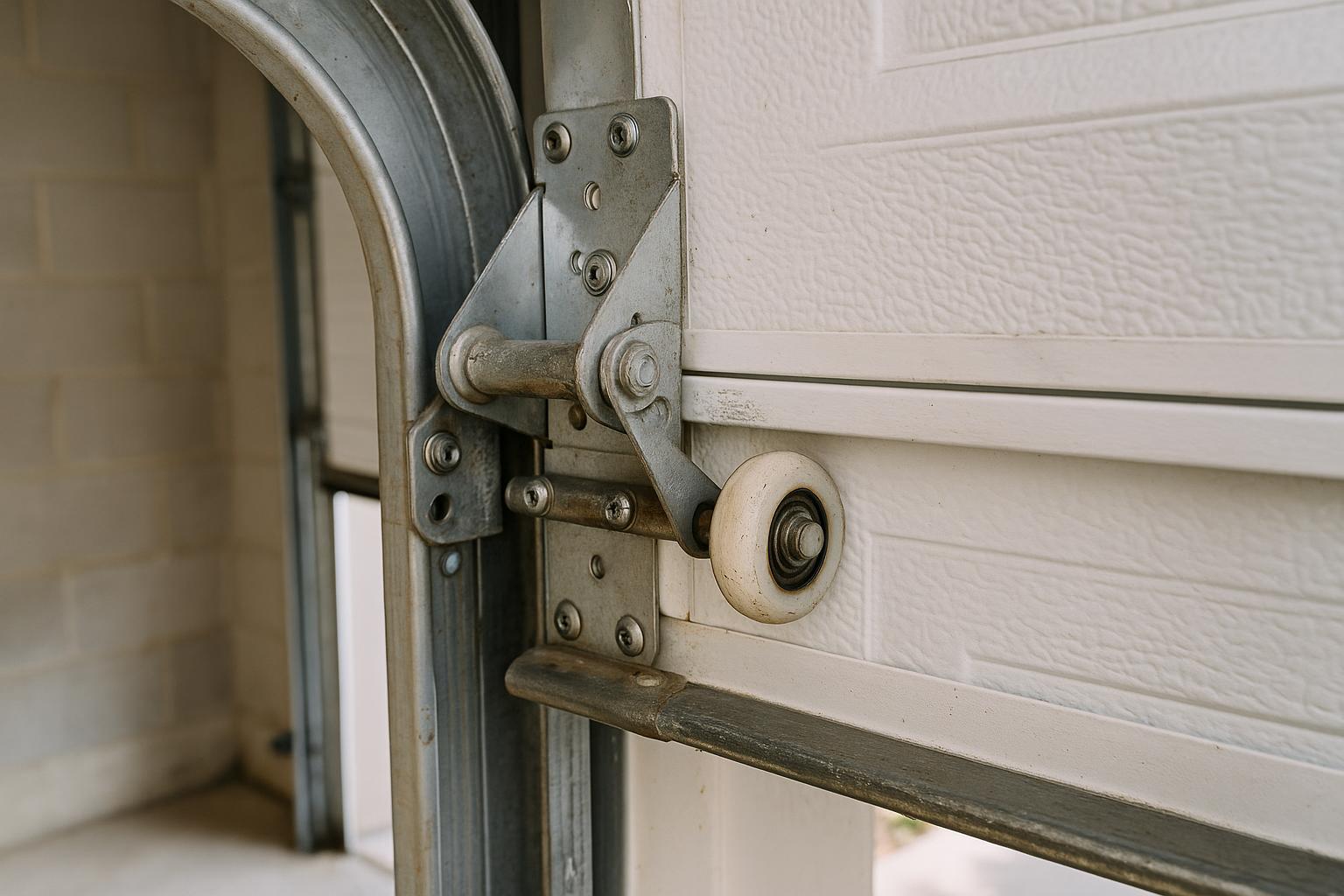
A grinding or scraping noise when your garage door opens or closes usually points to a problem with the tracks, rollers, or hinges. Over time, metal rollers can wear down, lose lubrication, or develop flat spots. When this happens, they no longer roll smoothly along the tracks and instead drag or grind against the metal surface.
Another common cause is misaligned tracks. If the vertical or horizontal tracks shift even slightly out of position, the door can scrape against them as it moves. This is particularly common in older Chicago homes where the garage structure may have settled over the years.
What You Can Do
- Inspect the rollers for visible wear, cracks, or flat spots. Nylon rollers tend to be quieter and last longer than standard steel rollers.
- Check the tracks for bends, dents, or gaps where they connect. Never try to force a track back into alignment yourself — the door is under significant tension.
- Apply a garage door-specific lubricant to the rollers and hinges. Avoid using WD-40, which is a solvent, not a long-term lubricant.
Squealing or Screeching Noises
High-pitched squealing is one of the most unpleasant garage door sounds, and it usually means metal is rubbing against metal without adequate lubrication. The most common culprits are the torsion spring coils, the bearing plates, and the hinges.
In Chicago, where temperature swings between seasons are extreme, metal components expand and contract repeatedly. This accelerates wear and dries out lubrication faster than you might expect. If you haven't had your garage door serviced in over a year, dried-out components are a likely cause of that squealing sound.
What You Can Do
- Lubricate the torsion springs, hinges, bearing plates, and roller stems with a silicone-based or lithium-based garage door lubricant.
- Schedule regular maintenance — ideally twice a year — to keep all moving parts properly lubricated and adjusted. Many homeowners in Evergreen Park, Oak Lawn, and the surrounding South Side neighborhoods schedule service in spring and fall to stay ahead of seasonal changes.
Rattling or Vibrating Sounds
If your garage door rattles or vibrates excessively during operation, the issue is often loose hardware. A typical garage door has dozens of nuts, bolts, brackets, and screws that can loosen over time due to the constant vibration of daily use.
The garage door opener itself can also be a source of rattling. Chain-drive openers are inherently louder than belt-drive models, and as the chain ages, it can develop slack that causes a rattling or slapping sound during operation.
What You Can Do
- Use a socket wrench to tighten all visible nuts and bolts on the door panels, hinges, brackets, and track mounts. Be careful not to overtighten, as this can strip the holes or warp the hardware.
- Check the chain tension on your opener if you have a chain-drive model. If the chain hangs more than half an inch below the rail, it likely needs adjustment.
- If you're tired of a noisy chain-drive opener, consider upgrading to a belt-drive model. They operate significantly quieter and are a popular choice for homeowners in Cicero, Berwyn, and other neighborhoods where attached garages sit right below bedrooms.
Banging or Popping Sounds
A loud bang or pop when the door starts moving is often related to the torsion springs. As springs age and lose tension, they can bind or slip, releasing energy in a sudden pop. This can also happen when spring coils rub against each other due to insufficient lubrication.
Panel-related issues can also cause banging. If a panel is warped, damaged, or has come loose from its hinges, it can shift and slam during operation. This is especially common after a car bumps into the door or after storm damage.
What You Can Do
- Do not attempt to adjust or replace torsion springs yourself. These springs are under extreme tension and can cause serious injury. This is a job for a trained technician.
- Inspect the door panels for visible warping, dents, or separation from the hinges. If you notice damage, call a professional to assess whether the panel can be repaired or needs replacement.
Humming or Buzzing Without Movement
If you hear your garage door opener humming or buzzing but the door doesn't move, the motor is running but the door isn't responding. This could mean the opener's drive gear has stripped, the door has become disconnected from the opener carriage, or something is physically preventing the door from moving — like a broken spring or an obstruction in the tracks.
What You Can Do
- Check whether the emergency release cord has been pulled, which disconnects the door from the opener. If it has, reconnect it by pulling the cord toward the opener and manually lifting the door until the carriage clicks back into place.
- If the door feels extremely heavy when you try to lift it manually, a spring has likely broken. Do not continue trying to operate the door with the opener, as this can burn out the motor.
- Call a professional to diagnose the issue. Continuing to run the opener when the door isn't moving can cause additional damage to the motor and drive system.
When to Call a Professional
Some garage door noises can be resolved with basic lubrication and hardware tightening. But many of the underlying causes — misaligned tracks, worn springs, stripped gears, and damaged panels — require professional tools, parts, and expertise to fix safely.
As a general rule, call a garage door technician if:
- The noise is new, sudden, or getting worse
- You notice the door moving unevenly or jerking during operation
- The door feels heavier than usual when lifted manually
- You see visible damage to springs, cables, or tracks
- The opener runs but the door doesn't move
Ignoring these signs can turn a minor repair into a major one — or worse, create a safety risk for your family.
Keep Your Garage Door Running Quietly
The best way to prevent a noisy garage door is with regular professional maintenance. A trained technician will lubricate all moving parts, tighten hardware, inspect springs and cables for wear, test the balance and alignment of the door, and catch small problems before they become expensive repairs.
At Chicago Garage Door Experts, we help homeowners across Chicago, Blue Island, Oak Lawn, and the surrounding communities keep their garage doors operating safely and quietly. Whether you're dealing with a mysterious new noise or a door that's been getting louder for months, we'll diagnose the problem and get it fixed right.
Give us a call today to schedule an inspection. A quieter, smoother garage door is just one service visit away.