
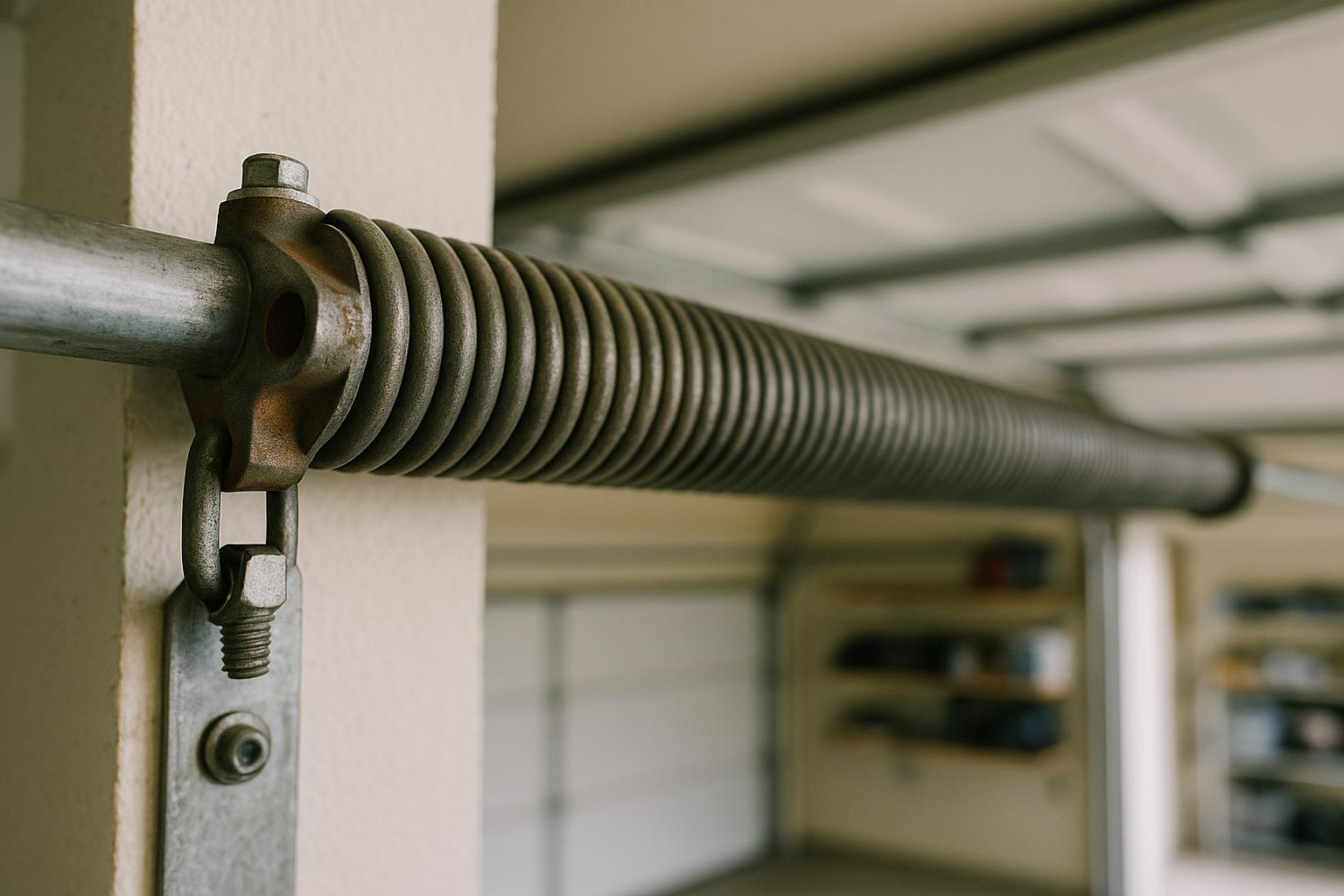
Your Garage Door Springs Are Under More Stress Than You Think
Every time you open and close your garage door, the springs do the heavy lifting — literally. A standard garage door can weigh anywhere from 130 to 400 pounds, and the springs are responsible for counterbalancing all of that weight. Over time, the constant tension and thousands of cycles take their toll. Eventually, every garage door spring will fail.
The question isn't if your springs will break — it's when. And if you're a homeowner in Chicago, where garage doors get used multiple times a day in all kinds of weather, spring failure can happen sooner than you'd expect. The good news is that worn-out springs almost always give you warning signs before they snap. Here's what to watch for so you can get ahead of the problem.
How Long Do Garage Door Springs Last?
Most standard torsion springs are rated for about 10,000 cycles. One cycle equals one full open and one full close. If your household opens and closes the garage door four times a day, that's roughly 1,460 cycles per year — meaning your springs could last about seven years under normal use.
However, several factors can shorten that lifespan:
- Extreme temperature swings — Chicago's climate puts extra stress on metal components as they expand and contract between summer heat and winter cold.
- Lack of maintenance — Springs that aren't lubricated regularly develop more friction and wear out faster.
- Rust and corrosion — Moisture from rain, snow, and road salt can corrode springs, weakening them over time.
- Heavy usage — Families with multiple drivers or those who use the garage as a primary entry point will cycle through springs faster.
7 Warning Signs Your Springs Are Wearing Out
1. The Door Feels Heavier Than Usual
If you disconnect the opener and try to lift the door manually, it should move relatively easily and stay in place when you let go about halfway up. If the door feels noticeably heavy or slams down when you release it, the springs have lost tension and are no longer doing their job effectively. This is one of the earliest and most reliable signs of spring fatigue.
2. The Door Opens Unevenly or Crooked
If your garage door has two extension springs (one on each side), one may wear out faster than the other. When this happens, the door can rise unevenly, tilting to one side. You might notice one side lifting higher or the door looking crooked in the tracks. This puts extra strain on the opener, the cables, and the remaining spring, which can lead to a cascade of problems.
3. You Hear Loud Squeaking or Grinding
Some noise during operation is normal, but loud squeaking, popping, or grinding sounds are red flags. These noises often indicate that the spring coils are rubbing against each other due to wear, rust, or a lack of lubrication. If regular lubrication doesn't quiet things down, the springs may be nearing the end of their life.
4. There's a Visible Gap in the Spring
Take a look at your torsion spring — it's the tightly wound coil mounted on the bar above the door. If you see a visible gap or separation in the coils, the spring has already broken or is in the process of failing. This is an urgent situation that requires professional attention immediately. A broken torsion spring is under extreme tension and can cause serious injury if handled improperly.
5. The Opener Struggles or Stops Mid-Cycle
Your garage door opener is designed to work with the springs, not replace them. When springs lose their counterbalance, the opener has to work much harder to lift the door. You might notice the motor straining, the door moving more slowly than usual, or the opener stopping partway through a cycle. Continuing to run the opener under these conditions can burn out the motor, turning a spring replacement into a much more expensive repair.
6. Cables Look Loose or Frayed
The cables work in tandem with the springs to lift and lower the door safely. When a spring breaks or loses tension, the cables can go slack or become tangled. Inspect the cables running along the sides of the door — if they look loose, frayed, or have come off the drum, there's a good chance the springs are the root cause.
7. The Door Closes Too Fast
A properly functioning garage door closes in a controlled, steady motion. If the door drops quickly or slams shut, the springs are no longer providing adequate resistance. This is both a safety hazard and a sign that failure is imminent. A fast-closing door can damage the door panels, the floor, or anything — or anyone — underneath it.
Why You Should Never Replace Garage Door Springs Yourself
We understand the DIY spirit, and there are plenty of garage door tasks that handy homeowners can handle. Spring replacement is not one of them. Torsion springs are wound under tremendous force, and a mistake during removal or installation can result in the spring releasing violently. Every year, emergency rooms treat serious injuries caused by DIY spring repairs gone wrong.
Professional technicians have the specialized tools, training, and experience to replace springs safely and correctly. They'll also ensure the new springs are properly sized and calibrated for your specific door, which is critical for safe and balanced operation.
What to Expect During a Professional Spring Replacement
When you call a professional for spring replacement, here's what typically happens:
- The technician inspects the entire door system, including the springs, cables, rollers, and hardware.
- The old springs are carefully unwound and removed using specialized winding bars.
- New springs are installed, wound to the correct tension, and tested.
- The door is balanced and adjusted to ensure smooth, even operation.
- All hardware is inspected and lubricated.
The entire process usually takes about an hour, and a good technician will also let you know about any other components that may need attention soon.
Staying Ahead of Spring Problems in Chicago
Living in Chicago means your garage door components work harder than average. Between the freezing winters, humid summers, and the road salt that finds its way into every corner of your garage, springs face a tough environment. Regular maintenance — including lubrication, visual inspections, and balance tests — can help you catch problems early and extend the life of your springs.
If you've noticed any of the warning signs listed above, don't wait for a complete failure. A broken spring at the worst possible moment — like a freezing January morning in Evergreen Park or a rainy evening in Oak Lawn — is the kind of headache nobody needs.
At Chicago Garage Door Experts, we provide fast, reliable spring replacement across Chicago's South Side and surrounding communities, including Cicero, Berwyn, and Blue Island. We carry a wide selection of springs on our trucks so most repairs can be completed in a single visit. If your garage door isn't acting right, give us a call and let us take a look before a small problem becomes a big one.