
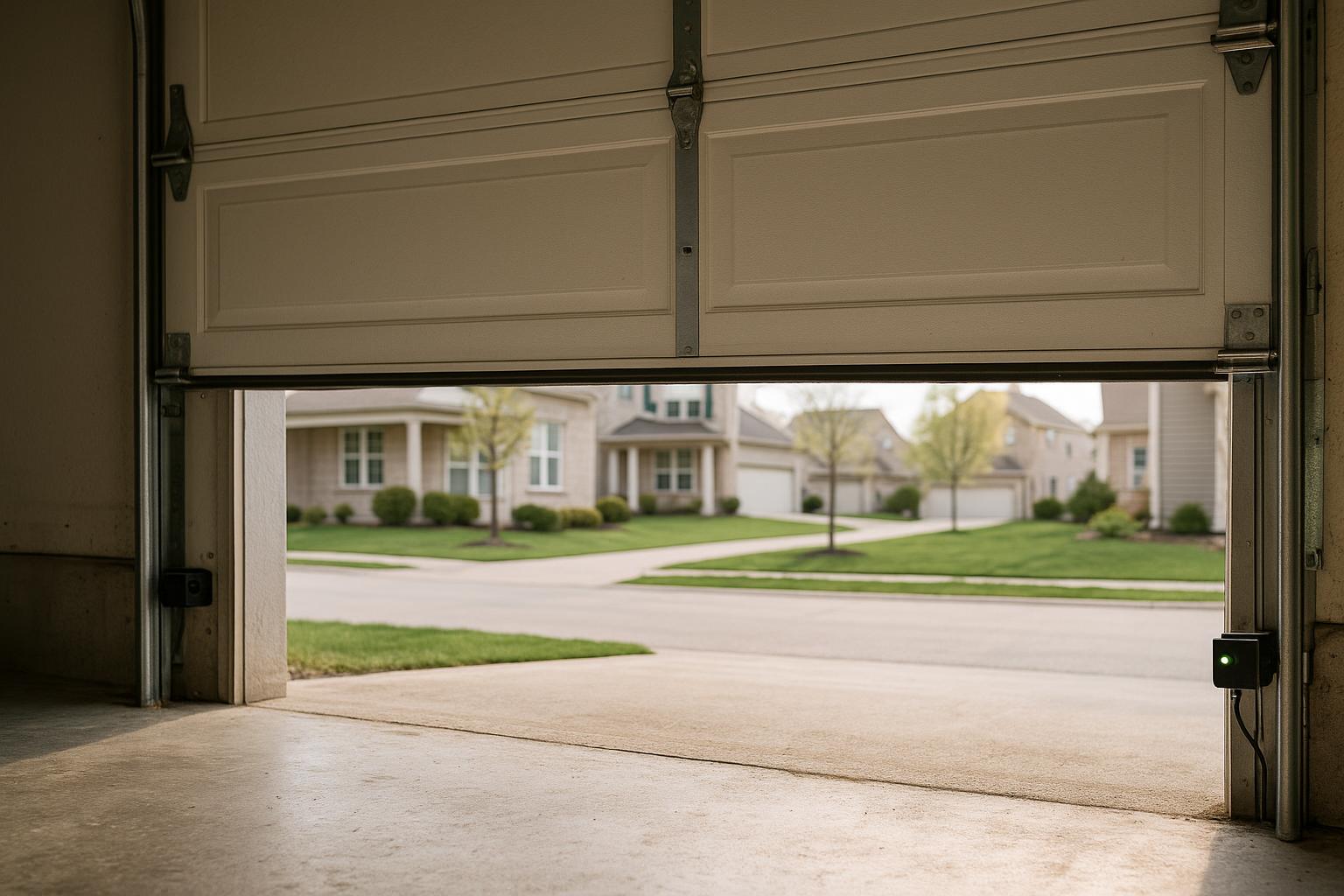
That Frustrating Moment When Your Garage Door Won't Stay Closed
You press the button on your remote, watch your garage door descend, and just before it reaches the floor — it reverses and goes right back up. You try again. Same thing. Maybe you try holding the wall button, and it still won't cooperate. If you're a homeowner in Chicago dealing with this problem, you're not alone. This is one of the most common garage door issues we see, especially during the temperature swings that come with living in the Midwest.
The good news is that a garage door that reverses before closing usually has a fixable cause. The bad news is that ignoring it can leave your home vulnerable to weather, pests, and security risks — none of which you want heading into a Chicago winter or even during our unpredictable spring storms.
Let's walk through the most common reasons your garage door reverses before hitting the floor and what you can do about each one.
1. Misaligned or Dirty Safety Sensors
This is the number one cause of a garage door that reverses before closing. Every modern garage door opener has two photo-eye sensors mounted near the bottom of the door tracks, about six inches off the ground. These sensors send an invisible beam across the opening. If something breaks that beam — or if the sensors can't communicate with each other — the opener interprets it as an obstruction and reverses the door as a safety precaution.
Here's what to check:
- Dirt or debris on the sensor lenses. Wipe both lenses gently with a soft cloth. Dust, cobwebs, and grime build up over time, especially in garages that see a lot of foot traffic or are used for storage.
- Misalignment. If one sensor has been bumped or shifted, the beam won't connect. Look for a steady green light on both sensors. A blinking light usually means they're out of alignment. Gently adjust the sensor until the light holds steady.
- Sun interference. Direct sunlight hitting a sensor can sometimes overwhelm the infrared beam. This is more common during certain times of year when the sun sits lower on the horizon — something Chicago homeowners notice in late fall and winter.
2. Incorrect Close-Limit Settings
Your garage door opener has limit settings that tell it how far the door should travel when opening and closing. If the close-limit setting is off, the opener may think the door has hit an obstruction when it's actually just reaching the floor. The opener's built-in safety feature then kicks in and reverses the door.
Adjusting the close-limit switch usually involves turning a small screw on the opener unit. The process varies depending on your opener brand and model. If you're not comfortable making this adjustment yourself, a garage door technician can dial it in quickly during a service call.
3. Worn or Broken Springs
Garage door springs bear the weight of the door and help the opener raise and lower it smoothly. When springs wear out or lose tension, the door becomes heavier than the opener expects. The opener senses the extra resistance and reverses, thinking something is blocking the door's path.
Spring issues are especially common in Chicago and surrounding areas like Evergreen Park, Oak Lawn, and Cicero, where extreme temperature fluctuations cause the metal to expand and contract repeatedly over the years. If your springs look stretched, rusty, or if you notice the door feels heavier when you lift it manually, it's time for a professional inspection.
Important safety note: Garage door springs are under extreme tension. Never attempt to replace or adjust them yourself. This is a job for a trained technician with the right tools and experience.
4. Damaged or Obstructed Tracks
The metal tracks that guide your garage door need to be clean, properly aligned, and free of dents or bends. Even a small obstruction — a pebble, a piece of debris, or a slight bend in the track — can cause enough resistance to trigger the opener's auto-reverse feature.
Inspect your tracks visually from top to bottom. Look for:
- Dents or bends in the metal
- Gaps between the track and the wall-mounted brackets
- Debris or buildup inside the track channel
- Rust or corrosion, which is common in garages exposed to road salt and moisture during Chicago winters
Minor debris can be cleaned out with a cloth. But bent or misaligned tracks should be repaired by a professional to avoid further damage to the door or the opener.
5. Problems With the Opener Itself
Sometimes the issue isn't mechanical — it's the opener's logic board or motor. Older openers, particularly those over 10-15 years old, can develop electrical issues that cause erratic behavior, including reversing unexpectedly. Power surges, which aren't uncommon during summer storms in the Chicago area, can also damage opener circuits.
If you've checked the sensors, tracks, springs, and limit settings and the door still reverses, the opener may need to be repaired or replaced. Modern openers come with improved safety features, battery backup, and smartphone connectivity — making an upgrade a worthwhile investment for many homeowners in Berwyn, Blue Island, and across the South Side.
6. Weather Stripping or Threshold Seal Interference
This one surprises a lot of people. If you've recently installed new weather stripping along the bottom of your garage door or added a rubber threshold seal to the garage floor, the extra material can create just enough resistance to trigger the auto-reverse. The opener thinks the door is hitting something solid when it's really just pressing against the new seal.
The fix is usually a minor adjustment to the close-limit or down-force settings on the opener. In some cases, trimming the weather stripping slightly resolves the issue.
When to Call a Professional
Some of these fixes — cleaning sensors, removing track debris — are safe for a handy homeowner to tackle. But several of the causes we've discussed involve components under high tension or electrical systems that require professional expertise.
You should call a garage door technician if:
- Your springs appear damaged, rusted, or broken
- The tracks are bent or significantly misaligned
- You've tried adjusting the sensors and limit settings with no improvement
- The opener is making unusual noises or behaving erratically
- The door is more than 15 years old and showing multiple issues
At Chicago Garage Door Experts, we handle these kinds of calls every day across Chicago's South Side and neighboring communities. We'll diagnose the issue, explain your options clearly, and get your door working properly — usually in a single visit.
Don't Leave Your Garage Open to Trouble
A garage door that won't close all the way is more than an inconvenience. It's a security risk, an energy waste, and an invitation for pests and weather damage. If your door keeps reversing and you can't pinpoint the cause, don't let the problem linger. A quick professional diagnosis can save you from a much bigger repair bill down the road.
Whether you're in Oak Lawn, Cicero, or anywhere on Chicago's South Side, our team is ready to help. Give us a call and let's get your garage door back on track — literally.