
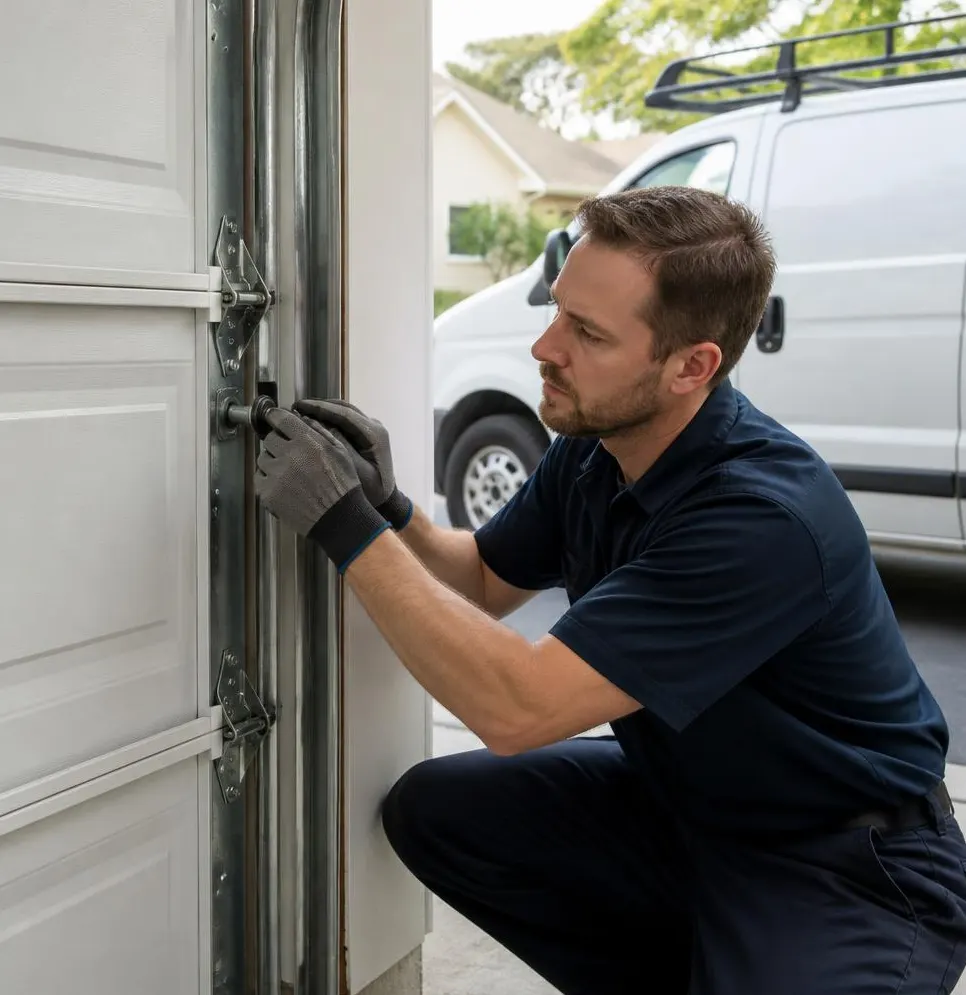
The Short Answer
Getting a garage door ready for winter means doing five things before the first hard freeze: replace worn weatherstripping, lubricate the moving parts, test the door's balance and auto-reverse safety feature, clear salt residue from the tracks, and check the opener's battery backup. None of these take more than a Saturday morning, and doing them now beats fighting a frozen or broken door in January.
Why This Matters Where You Live
A garage door is mostly steel, rubber, and lubricated moving parts, and all three react badly to the swing from a 60-degree October afternoon to a single-digit January night. Steel contracts in the cold, which changes how tightly panels and tracks fit together. Rubber seals get stiff and crack. Lubricant that was fine in summer humidity can thicken and slow down rollers and hinges. Add in road salt and de-icer tracked in on tires and boots all winter, and you've got a recipe for corrosion that doesn't show up until spring.
Replace Worn Weatherstripping Before the Cold Sets In
The rubber seal along the bottom of the door, and the side seals if your door has them, are your first defense against snow melt, wind-driven cold, and salt spray getting into the garage. Once temperatures drop, cracked or flattened weatherstripping lets in enough cold air to affect anything stored nearby, including vehicles, paint, and in some homes, plumbing that runs along a garage wall.
What to check
- Cracks, tears, or flat spots along the bottom seal
- Daylight visible around the edges when the door is closed
- Stiffness that keeps the seal from compressing against the floor
- Gaps at the corners where panels meet the frame
If the seal doesn't bend easily when you press it with a thumb, it's due for replacement. This is a low-cost fix that pays off all winter.
Lubricate the Right Parts With the Right Product
Hinges, rollers, the torsion spring, and the track all need a light coat of silicone-based or lithium-based garage door lubricant, not household oil or WD-40, which attracts dust and grit. Spray each hinge and roller bearing, wipe off the excess, and run the door up and down a couple of times to work it in. This single step cuts down on the grinding and squealing that tends to show up once cold makes metal parts stiffer.
Test the Balance and the Auto-Reverse Safety Feature
With the opener disconnected, lift the door halfway by hand. It should stay in place on its own. If it drifts down or shoots up, the springs are compensating poorly for the door's weight, and cold weather will make that worse, not better, since cold steel is more brittle and under more strain. Reconnect the opener and test auto-reverse by placing a 2x4 flat on the ground where the door closes. The door should reverse the moment it touches the board. If it doesn't reverse immediately, that's not a winter problem, that's a safety problem, and it needs attention before the door gets used again.
Clear Salt and De-Icer Residue From the Tracks
Once snow and ice season starts, salt and de-icer get tracked in on tires and boots and end up coating the bottom of the tracks and rollers. Left alone all winter, that residue corrodes metal and gums up roller movement. Wipe the tracks down with a damp cloth every few weeks through the season, especially after a storm, and you'll avoid the pitting and rust that shortens the life of tracks and rollers.
Check the Opener and Battery Backup
Cold weather is hard on batteries, including the backup battery in openers that have one. Test it now by unplugging the opener and confirming the door still opens and closes on battery power. Also wipe down the photo-eye sensors near the floor on each side of the door; road salt and winter grime build up on these faster than people expect, and a dirty sensor is one of the most common reasons a door refuses to close in winter.
Inspect Springs While You're Already Out There
You don't need to take the spring system apart, but look it over for visible rust, gaps between coils, or stretching. Cold makes steel springs more brittle and more likely to fail under the stress of a cycle, so a spring that was borderline in September often doesn't make it through February.
When to Call Chicago Garage Door Experts
If the door is out of balance, the auto-reverse test fails, or a spring shows wear, that's a job for a technician rather than a weekend project. Our Garage Door Maintenance service covers a full inspection, lubrication, balance adjustment, and hardware tightening in one visit, and if a spring needs attention, our Spring Replacement service gets it swapped out safely before it becomes a mid-winter breakdown. We serve homeowners across Chicago's South Side and nearby suburbs, and getting a technician out before the first deep freeze is a lot easier to schedule than after one.
Call Chicago Garage Door Experts today to get your garage door checked and ready before winter settles in across Chicago, IL.